


Sacri Monti del Piemonte e della Lombardia
"I nove Sacri Monti dell’Italia settentrionale sono gruppi di cappelle e di altri elementi architettonici eretti fra la fine del XV e l'inizio del XVIII secolo, dedicati a vari aspetti della fede cattolica. Oltre al loro significato simbolico spirituale, questi complessi offrono uno splendido esempio di integrazione degli elementi architettonici nei paesaggi circostanti, disseminati di colline, foreste e laghi; inoltre racchiudono un notevole patrimonio artistico in forma di scultura e affreschi". Con questa motivazione, nel 2003 l’UNESCO ha iscritto il sito “Sacri Monti del Piemonte e della Lombardia” nella Lista del Patrimonio Mondiale.
SCOPRI I SACRI MONTI
DEL PIEMONTE E DELLA LOMBARDIA
scarica la nuova APP SACRI MONTI UNESCO
Ecco la nuova App che vi guida alla visita dei Sacri Monti del Piemonte e della Lombardia - Patrimonio UNESCO, tramite percorsi interattivi multimediali.
Durante la visita, l’app vi accompagna da un punto all’altro e in ciascun punto del percorso offre una descrizione e degli approfondimenti che permettono di scoprire dettagli particolari e sorprendenti; per alcuni punti di interesse viene offerta una spiegazione aggiuntiva.
Scarica la APP dedicata alla conoscenza e alla visita dei nove "
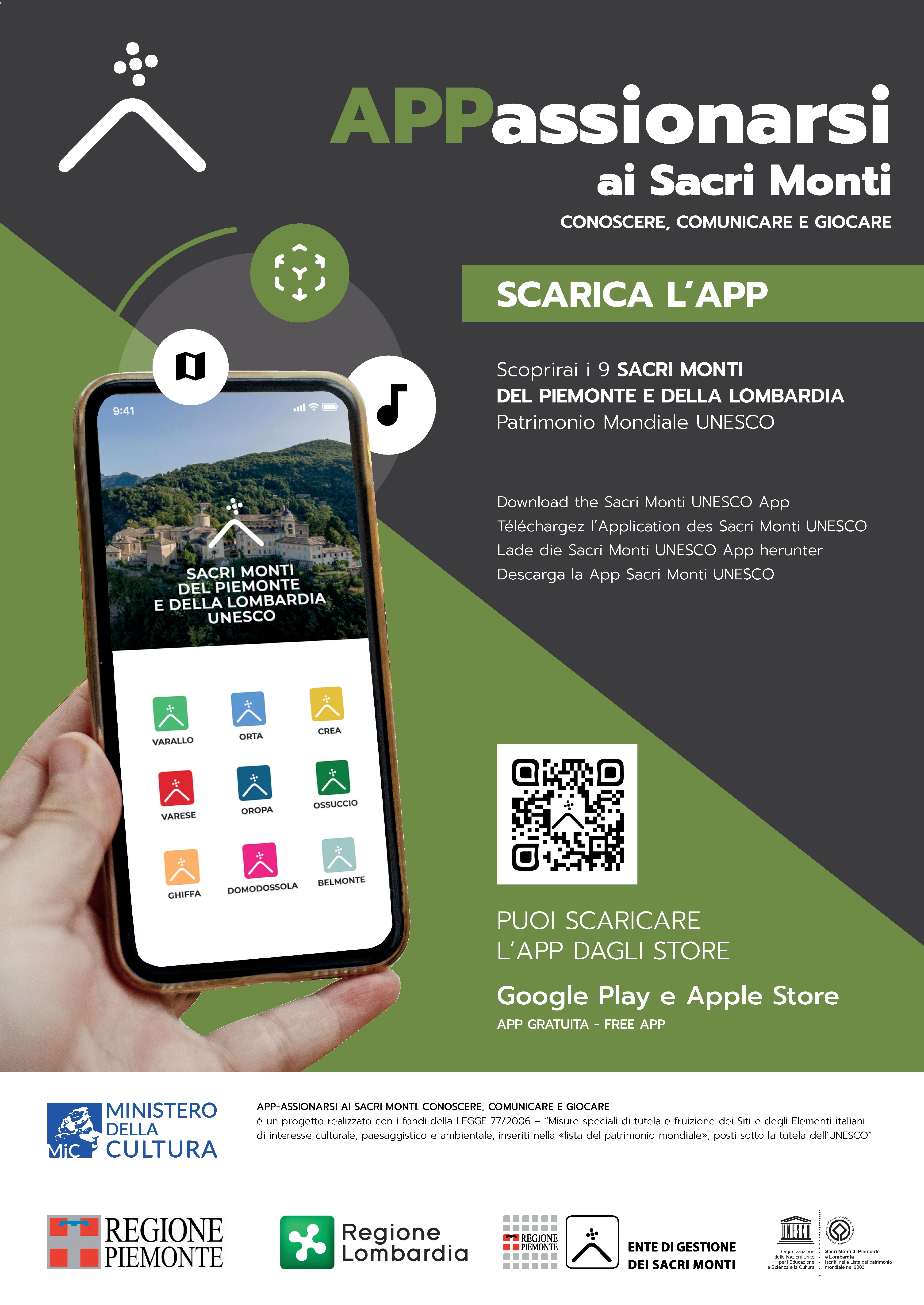
La App e gratuita ed è disponibile sul Google-play e su Apple-store, semplicemente cercando
Sacri Monti
Come fare?
Inquadra il QR-code dell'immagine sottostante e procedi con l'installazione,
oppure
clicca sull'immagine, scarica la APP dallo store che preferisci
e parti alla straordinaria scoperta dei Sacri Monti UNESCO


Visitare
il territorio
I territori dei Sacri Monti offrono numerose opportunità di visita del vasto e variegato patrimonio monumentale, culturale e paesaggistico che li circonda: ecco alcuni suggerimenti per un piacevole approfondimento di arte, tradizione e sapori locali.
Vedi le nostre proposte
Consulta la banca dati del Centro di documentazione dei Sacri Monti
link veloci


 Questo portale www.sacrimonti.org è un progetto finanziato a valere sui fondi della Legge 20 febbraio 2006, n. 77
Misure speciali di tutela e fruizione dei siti italiani di interesse culturale, paesaggistico e ambientale inseriti nella lista del patrimonio mondiale posti sotto la tutela dell'UNESCO
This work was carried out with funds made available under Law 77 of 20 February 2006
Progetto Interreg "MAIN10ANCE" ID 473472

Progetto GAL TERRE DEL SESIA: PSR 2014-20, MISURA 7.6.4


